Escape the Ivory Tower

  • Home
  • Blog
  • Resources
  • Tell Your Story
  • About Julie

March 4, 2011

Why master resumes are such a good idea

One of the big differences between CVs and resumes is that CVs are expected to be a complete documentation of everything you’ve ever done in academia, while resumes are expected to be a carefully selected and shaped collection of the relevant bits of your work history.

That’s not to say that recruiters or hiring managers won’t look askance at a resume that has obvious and unexplained holes in that history, but it is to say that I’ve seen perfectly good 25-page CVs, and if your resume goes over two, well, there’s probably a problem.

External memory is your friend

One of the great things about the CV is that it serves as a kind of external memory, capturing every conference presentation, publication, and course you’ve ever done time with. Many academics build “update CV” into their end-of-semester routines, because it helps keeps everything tidy for the promotion files.

And really, thank heavens for external memories, because without them I certainly wouldn’t remember that I once gave a conference presentation on John Steinbeck. (I would still be asking myself WHY I did such a thing, but that’s another story.)

When people use resumes instead of CVs, however, that external memory gets lost. People tend to update the last one they used, which means that they’re restricted to whatever selective information they included last time they applied for jobs. That’s great if they’re applying to the next job up the career ladder, but it shoots them in the foot if they’re trying to change careers.

Starting anew requires you to think outside your box

Whenever we’ve been in a career for a while, our assumptions about “what counts” get shaped by that career. I’ve seen a lot of academics write resumes that include a publication section but leave out that office job they did the summer between the MA and the PhD. There are very few jobs out there that care about your publications, but they very much might care that you spent your internship semester creating a database from scratch.

In order to think outside of those assumptions, we’ve got to get everything on the table. And that’s where the Master Resume comes in.

What is a master resume, anyway?

A master resume is like the CV of the non-academic world. It’s a resume that includes absolutely every job you’ve ever held and all the things you did and accomplishments you achieved in that job, whether you think right now they’ll be relevant or not. It includes all your volunteer gigs. It includes all your training. And it puts it in the format of a resume.

Your master resume is likely to be long — much longer than anything you’ll send out. But that’s okay. It isn’t designed to be something you send out. It’s designed to be the raw material you draw from when it’s time to write a resume for a particular job or career.

When everything is set out there in black and white, it’s much easier to recognize that you’ve got some relevant skills and experiences. And it’s also easier to pull the pieces together to make the argument that you’ve got something to offer your prospective employer.

A step by step guide to writing a master resume

Writing a master resume isn’t hard, but it can be time-consuming, so give your self plenty of space.

  • Start by writing down every job you’ve ever been paid for, from the 14-year-old bus-boy job or babysitting practice on up. Include every academic gig you’ve ever done.
  • For each of them, write down where you did it (geographic location), the dates you held that job, your official job title, and the company’s name.
  • For each of them, write down everything you did, everything you accomplished, and everything that told you you had done a good job. (Did the boss want to promote you? Did you get asked to do things outside your official job description?)
  • Go back and add numbers as much as possible in your lists of what you did. How many people did you do payroll for? How much money were you responsible for bringing in when you worked retail? How many people did you supervise?
  • Write down all of your volunteer and service work, including conferences you put on or managed, events you threw, etc.
  • Write down the location, dates, and titles of anything in that list.
  • Write down everything you did, everything you accomplished, and everything that told you you had done well.
  • Write down every award you’ve gotten from college on up.
  • Write down every school you attended, the degrees you earned, and the dates you earned them. (Don’t bother with high school.)
  • Type all of this up in a basic resume format.
  • Ask a curious and close-reading friend to read it over and ask you questions that might pull out more details.

Once you’ve used this master resume to write the targeted resume and cover letter that gets you in the door of a new job, come back and update it! Put a note in your calendar to update it quarterly, because in many jobs, your duties and your accomplishments will change rapidly, and you don’t want to lose anything.

Master resumes in short

Basically, master resumes are the foundation upon which any good job search stands, because they collect all of the bits of information you might be able to use to make a case for yourself — and you want your case to be as strong as possible.

So it’s worth starting there and creating a really comprehensive document for yourself. You never know when working as a temp in an insurance company will come in handy.

Filed Under: Turning Your Calling Into a Job 1 Comment

January 28, 2011

Getting over imposter syndrome

Turning a life lived in academia into something else can feel overwhelming. But there are strategies that work, and more resources than you can begin to imagine. Want to see all of the ones I’ve talked about so far? Click here for the job-search archives.

Applying for jobs can be uncomfortable

A while ago, I wrote a resume and cover letter for a client that left her deeply, deeply uncomfortable.

It wasn’t inaccurate. It wasn’t even stretching the truth – she had done every single thing on that resume just as it was described.

But she had spent so long believing that she didn’t have any relevant experience, that she didn’t have any transferrable skills, that she couldn’t reconcile her sense of herself with this description of her on paper.

Imposter syndrome rears its ugly head

Academics talk a lot about imposter syndrome, that sense of being a fraud and being afraid that any second now, someone is going to figure out that we aren’t as smart as they thought we were.

It’s often bandied about as a joke, as a form of “we’re all in this together” bonding, but for many people, it can be crippling. And it is nowhere as crippling as it is when you’re trying to get another job.

That’s because, in order to get a job, we have to talk about what we have to offer – which means we have to believe we have something to offer. When we don’t, things go downhill fast.

You’ve got a lot to offer

Academia doesn’t generally talk about the skills involved in doing all the work of higher education. It likes to focus on content knowledge, because that’s how it’s set up. Sure, different disciplines may have different kinds of research skills, and different disciplines may have different kinds of problems that require solving, but for the most part, we talk about disciplines in terms of what they study – not how they go about it.

We also rarely teach the underlying skills directly, with exceptions such as statistics and software packages. We expect people to learn them through osmosis, trial and error, or some other undisclosed method that comes down to “leave me alone” and “prove it.”

But just because we don’t talk about them and don’t teach them overtly doesn’t mean you haven’t learned and honed many, many skills during your time in academia.

It also doesn’t mean that the skills you’ve learned and honed in your life outside of academia are useless – despite academia’s pointed ignoring of anything else we do in our lives.

In fact, it’s nearly impossible to get through academia and to your late twenties (or later!) without picking up a whole host of skills that organizations outside academia would love to have: problem-solving, research, clear communication, the ability to manage and motivate groups of people, designing curricula, public speaking, coordinating events, managing budgets, supervising staff, and much, much more.

The first thing you have to do is convince yourself

But in order to convince someone else of your skills, you first have to convince yourself. And the best way to do this, I’ve found, is to work with someone objective – a friend, a family member, a coach – to put together a resume that is both accurate and a little discomfiting. Someone else will be able to ask you the questions that will help get all of your accomplishments down on paper even if, in your mind, they aren’t really worth anything.

When you see your skills right there in black and white, then you can attend to all those little voices that start speaking up in the back of your head – the ones that say things like, “But why do you think that’s good enough?” or “You call that managing a budget? It was only a conference!”

When that chorus starts up, then you have the opportunity to notice the fears and doubts that are standing between you and a confident application, and when you notice them, you can answer them.

Sometimes you can answer them by providing evidence: “Well, this is actually exactly what they’re asking for!”

Sometimes you can answer them by asking questions: “What does ‘good enough’ mean? What does it look like?”

However you answer them, getting them out in the open is nearly always the first step towards creating a strong application that accurately reflects your accomplishments – and thus helps you get a job.

Exploring our hard and soft skills is one of the things Jo VanEvery and I are teaching in our upcoming 8-week class, Choosing Your Career Consciously. If you’d like to learn more, click here.

Turning a life lived in academia into something else can feel overwhelming. But there are strategies that work, and more resources than you can begin to imagine. Want to see all of the ones I’ve talked about so far? Click here for the job-search archives.

Applying for jobs can be uncomfortable

A while ago, I wrote a resume and cover letter for a client that left her deeply, deeply uncomfortable.

It wasn’t inaccurate. It wasn’t even stretching the truth – she had done every single thing on that resume just as it was described.

But she had spent so long believing that she didn’t have any relevant experience, that she didn’t have any transferrable skills, that she couldn’t reconcile her sense of herself with this description of her on paper.

Imposter syndrome rears its ugly head

Academics talk a lot about imposter syndrome, that sense of being a fraud and being afraid that any second now, someone is going to figure out that we aren’t as smart as they thought we were.

It’s often bandied about as a joke, as a form of “we’re all in this together” bonding, but for many people, it can be crippling. And it is nowhere as crippling as it is when you’re trying to get another job.

That’s because, in order to get a job, we have to talk about what we have to offer – which means we have to believe we have something to offer. When we don’t, things go downhill fast.

You’ve got a lot to offer

Academia doesn’t generally talk about the skills involved in doing all the work of higher education. It likes to focus on content knowledge, because that’s how it’s set up. Sure, different disciplines may have different kinds of research skills, and different disciplines may have different kinds of problems that require solving, but for the most part, we talk about disciplines in terms of what they study – not how they go about it.

We also rarely teach the underlying skills directly, with exceptions such as statistics and software packages. We expect people to learn them through osmosis, trial and error, or some other undisclosed method that comes down to “leave me alone” and “prove it.”

But just because we don’t talk about them and don’t teach them overtly doesn’t mean you haven’t learned and honed many, many skills during your time in academia.

It also doesn’t mean that the skills you’ve learned and honed in your life outside of academia are useless – despite academia’s pointed ignoring of anything else we do in our lives.

In fact, it’s nearly impossible to get through academia and to your late twenties (or later!) without picking up a whole host of skills that organizations outside academia would love to have: problem-solving, research, clear communication, the ability to manage and motivate groups of people, designing curricula, public speaking, coordinating events, managing budgets, supervising staff, and much, much more.

The first thing you have to do is convince yourself

But in order to convince someone else of your skills, you first have to convince yourself. And the best way to do this, I’ve found, is to work with someone objective – a friend, a family member, a coach – to put together a resume that is both accurate and a little discomfiting. Someone else will be able to ask you the questions that will help get all of your accomplishments down on paper even if, in your mind, they aren’t really worth anything.

When you see your skills right there in black and white, then you can attend to all those little voices that start speaking up in the back of your head – the ones that say things like, “But why do you think that’s good enough?” or “You call that managing a budget? It was only a conference!”

When that chorus starts up, then you have the opportunity to notice the fears and doubts that are standing betw

Turning a life lived in academia into something else can feel overwhelming. But there are strategies that work, and more resources than you can begin to imagine. Want to see all of the ones I’ve talked about so far? Click here for the job-search archives.

Applying for jobs can be uncomfortable

A while ago, I wrote a resume and cover letter for a client that left her deeply, deeply uncomfortable.

It wasn’t inaccurate. It wasn’t even stretching the truth – she had done every single thing on that resume just as it was described.

But she had spent so long believing that she didn’t have any relevant experience, that she didn’t have any transferrable skills, that she couldn’t reconcile her sense of herself with this description of her on paper.

Imposter syndrome rears its ugly head

Academics talk a lot about imposter syndrome, that sense of being a fraud and being afraid that any second now, someone is going to figure out that we aren’t as smart as they thought we were.

It’s often bandied about as a joke, as a form of “we’re all in this together” bonding, but for many people, it can be crippling. And it is nowhere as crippling as it is when you’re trying to get another job.

That’s because, in order to get a job, we have to talk about what we have to offer – which means we have to believe we have something to offer. When we don’t, things go downhill fast.

You’ve got a lot to offer

Academia doesn’t generally talk about the skills involved in doing all the work of higher education. It likes to focus on content knowledge, because that’s how it’s set up. Sure, different disciplines may have different kinds of research skills, and different disciplines may have different kinds of problems that require solving, but for the most part, we talk about disciplines in terms of what they study – not how they go about it.

We also rarely teach the underlying skills directly, with exceptions such as statistics and software packages. We expect people to learn them through osmosis, trial and error, or some other undisclosed method that comes down to “leave me alone” and “prove it.”

But just because we don’t talk about them and don’t teach them overtly doesn’t mean you haven’t learned and honed many, many skills during your time in academia.

It also doesn’t mean that the skills you’ve learned and honed in your life outside of academia are useless – despite academia’s pointed ignoring of anything else we do in our lives.

In fact, it’s nearly impossible to get through academia and to your late twenties (or later!) without picking up a whole host of skills that organizations outside academia would love to have: problem-solving, research, clear communication, the ability to manage and motivate groups of people, designing curricula, public speaking, coordinating events, managing budgets, supervising staff, and much, much more.

The first thing you have to do is convince yourself

But in order to convince someone else of your skills, you first have to convince yourself. And the best way to do this, I’ve found, is to work with someone objective – a friend, a family member, a coach – to put together a resume that is both accurate and a little discomfiting. Someone else will be able to ask you the questions that will help get all of your accomplishments down on paper even if, in your mind, they aren’t really worth anything.

When you see your skills right there in black and white, then you can attend to all those little voices that start speaking up in the back of your head – the ones that say things like, “But why do you think that’s good enough?” or “You call that managing a budget? It was only a conference!”

When that chorus starts up, then you have the opportunity to notice the fears and doubts that are standing between you and a confident application, and when you notice them, you can answer them.

Sometimes you can answer them by providing evidence: “Well, this is actually exactly what they’re asking for!”

Sometimes you can answer them by asking questions: “What does ‘good enough’ mean? What does it look like?”

However you answer them, getting them out in the open is nearly always the first step towards creating a strong application that accurately reflects your accomplishments – and thus helps you get a job.

Exploring our hard and soft skills is one of the things Jo VanEvery and I are teaching in our upcoming 8-week class, Choosing Your Career Consciously. If you’d like to learn more, click here.

een you and a confident application, and when you notice them, you can answer them.

Sometimes you can answer them by providing evidence: “Well, this is actually exactly what they’re asking for!”

Sometimes you can answer them by asking questions: “What does ‘good enough’ mean? What does it look like?”

However you answer them, getting them out in the open is nearly always the first step towards creating a strong application that accurately reflects your accomplishments – and thus helps you get a job.

Exploring our hard and soft skills is one of the things Jo VanEvery and I are teaching in our upcoming 8-week class, Choosing Your Career Consciously. If you’d like to learn more, click here.

Filed Under: Turning Your Calling Into a Job Leave a Comment

November 7, 2010

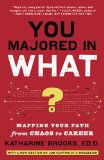
Book Review: You Majored in What?

Book Review: You Majored in What?

There are thousands of career, job, and calling books on the market. Some of them are useful. Some of them are good mostly for propping doors. I’m going to call out the ones that are most likely to be interesting and useful to you as you explore what makes you happy and how you can turn that into a career.

What’s this book about?

Katharine Brooks is a career counselor at the University of Texas at Austin, and You Majored in What?: Mapping Your Path from Chaos to Career is focused on the particular struggle faced by undergraduate students in non-preprofessional majors: English, history, comparative literature, sociology, and every other major that doesn’t come with an obvious entry-level position.

But many of the problems she addresses are equally challenging for post-academic career changers whose field of study doesn’t obviously cross over from the ivory tower to the business world: figuring out what career to pursue, mapping out what you have to offer, and translating what you have to offer into terms other people understand.

What makes this book different?

Although the topic isn’t necessarily new and different, two things stand out here: a focus on chaos theory and a visual style of brainstorming and thinking.

When I first encountered the bit about chaos theory, I’ll admit to rolling my eyes. You know, fad topic, applies to everything, yadda yadda. But if we think about chaos theory as a way to describe and interact with systems that are both ordered and too complicated to model, well, it’s true that looks an awfully lot like a life.

Brooks applies chaos theory in an interesting way, too, by boiling its lessons down to three actionable questions: What do you know? What do you not know? What can you learn? Asking — and answering — those three questions can help you take all of that panic and uncertainty and wrestle it into something you can work with while simultaneously expecting the unexpected. Because after all, you really do have no idea how this will unfold.

The other thing that sets her apart is a visually-based style of brainstorming and thinking about career choices. Most of the career books out there are based on linear thinking models like lists, but Brooks relies on mindmaps and other graphic ways of clustering and connecting information, which is nice for those of us who have to see how things connect and yet don’t like drawing messy lines unless we’re supposed to be drawing messy lines. (Why yes, I am a recovering perfectionist. Why do you ask?)

What makes this useful?

In addition to the chaos-theory and visual-brainstorming angles, I appreciated this book for its passionate belief that non-preprofessional degrees are hugely valuable — without falling into the “you can write!” trap that so many books and websites find themselves in.

For example, she talks about “mindsets” as soft skills that are hugely valuable to employers, and mindsets, because we’re so familiar with our own, are precisely the kinds of things we often don’t think to include as we inventory what we can offer.

Not all of it will be useful without some translation — listing what you’ve learned from the different classes you’ve taken is probably not something you’re going to do, but thinking about the big-picture skills and abilities you’ve learned and demonstrated while knocking out a research manuscript while simultaneously tapdancing on the desk to keep those undergrads engaged should be.

But it’s a far more interesting, lively, readable, and doable book than us than most of the ones out there –even if it is aimed at undergraduates.

All links to books in book reviews are affiliate links. You can read more about them here.

Filed Under: Book reviews, Turning Your Calling Into a Job Leave a Comment

« Previous Page
Next Page »

Meet Julie

Want to know what I'm all about? Click here to listen to me get interviewed by Daniel Mullen of The Unemployed Philosopher.

You can also learn more about my history -- Read More…

Myths and Mismatches eCourse

Jo VanEvery and I have put together a free eCourse on the most common myths and mismatches we see in people who are unhappy in academia.

It's one lens through which you can examine your own unhappiness and better diagnose the problem -- which makes finding a solution that much easier.

Find out more by clicking here!

Recent Posts

  • Writing Resumes and Cover Letters? Here Are Some Tips
  • I Still Think Calling Is Important
  • You Need Abundant, Luxurious Self-Care
  • Give Yourself Room to Fall Apart
  • Tip: Ask People About Their Jobs

Site Links

Affiliate Policy

Site Credits

Find Me Online

  • Instagram
  • Twitter

Copyright © 2009–2015 by Julie Clarenbach · All Rights Reserved